

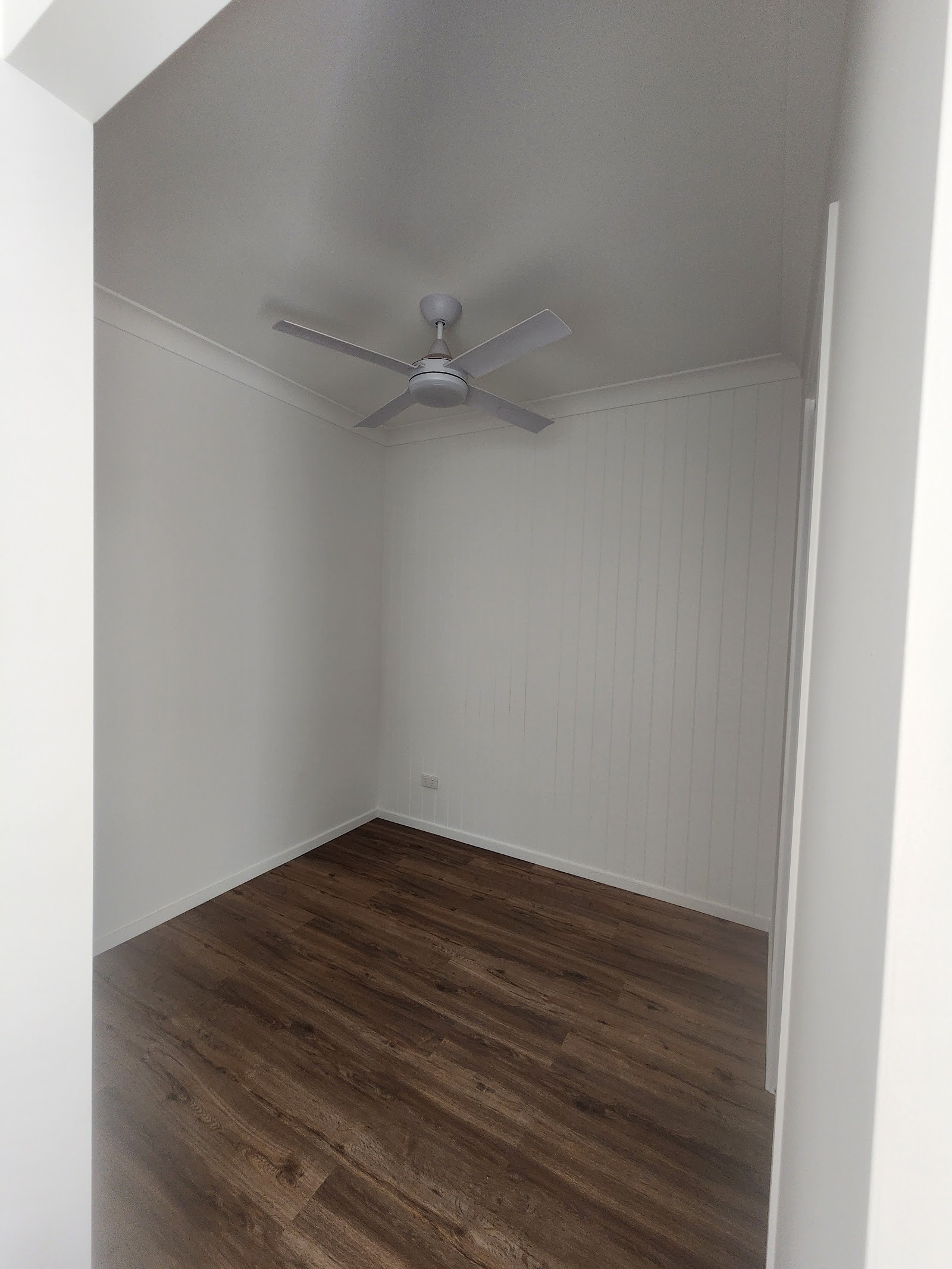
Brisbane’s warm, humid climate is great for outdoor living, but it’s tough on paint. Moisture in the air and in building materials is one of the most common reasons paint blisters, peels or grows mould. Understanding why helps you get a longer-lasting finish.
Why humidity matters
Paint needs the right conditions to dry and cure properly. When humidity is very high, water-based paints dry more slowly, and moisture can get trapped under the film. That can lead to poor adhesion, surfactant leaching (sticky or shiny streaks on fresh paint) and blistering on surfaces that were damp when painted.
Common problems we see
- Mould and mildew on bathroom ceilings, laundries and shaded exterior walls.
- Bubbling and peeling where moisture is getting behind the paint, often from leaks, rising damp or poorly sealed joints.
- Swollen or cracked timber on window frames, fascias and decks that weren’t sealed properly.
How to get paint that lasts
Fix the moisture source first. Repainting over a leaking gutter, a failed shower seal or a damp wall only hides the problem for a while.
Clean and treat mould. Mould needs to be killed and cleaned off before painting, not just painted over.
Use the right products. Bathrooms, kitchens and laundries benefit from paints designed for wet areas, and the right primer makes a big difference on bare timber and repaired plaster.
Paint at the right time. On exterior jobs we plan around the weather, avoiding painting just before rain or in heavy morning dew, so coats can dry properly.
Keep air moving. Exhaust fans and good ventilation in wet areas reduce condensation and help your paintwork stay clean.
Talk to a local painter
If your paint is peeling, bubbling or growing mould, we can inspect it, work out the cause and recommend a fix. Find out more about our interior painting and wall repair services, or get a free quote today. Call 0414 334 519.